Process + Context of Interactive Design

Within this blog post, I will be discussing the importance of “process and context” when designing interactives. Before diving into the concept of context, we must first understand the design process. Verplank states that there are at least 8 stages, that can be identified in the interactive design process. The image below illustrates the process of invention to presentation.
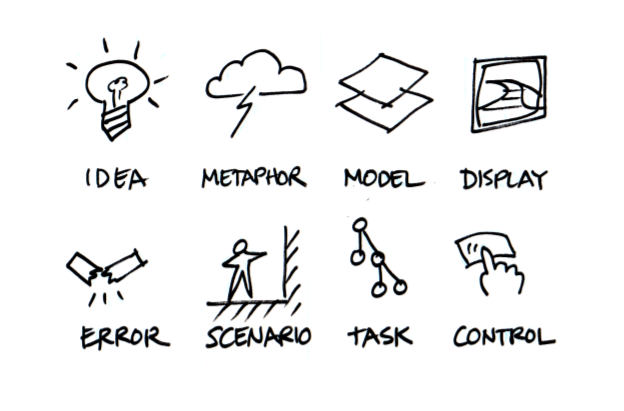
Interaction Design Sketchbook [Image] (2009, December 1). Retrieved March 20, 2019 from http://www.billverplank.com/IxDSketchBook.pdf

For most people project ideas are usually generated on pen and paper, which allows designers to understand, define, and frame possible problems and improve upon them. Visualisations such as diagrams, models and flowcharts help identify direction, missing information, and the next steps that need to be taken. These low-tech research processes of identifying problems, are a step towards finding a solution. Along this process, all research and findings need to be transferred as a digital interactive prototype. It’s important to design appropriately for your audiences and design brief. On that note, there are numerous techniques to generate and gather ideas, such as precedent research of other existing products, observation of people, asking questions based on the observations and the testing of prototypes.

Moving along to the context aspect of interactive (context for use, contexts of use). When designing interactives, you not only need to know what information to display, but also the following: what people are trying to do, how they may try to do it, what gets in the way or helps, and where they might be doing it. Different type of contexts/situations provide different design solutions. The use of context scenarios helps identify the situation for people and their needs, this assists in the creation of designs that facilitate to different behaviours. To be able to create context scenarios, designers should ask themselves the following set of questions: what is the situation? Who will be using the device or interface? Does the experience need to be extremely simple? What are the persons needs and goals? These are an example of a few questions that need to be considered, though there several more to be answered.
Beginners Guide to Interaction Design

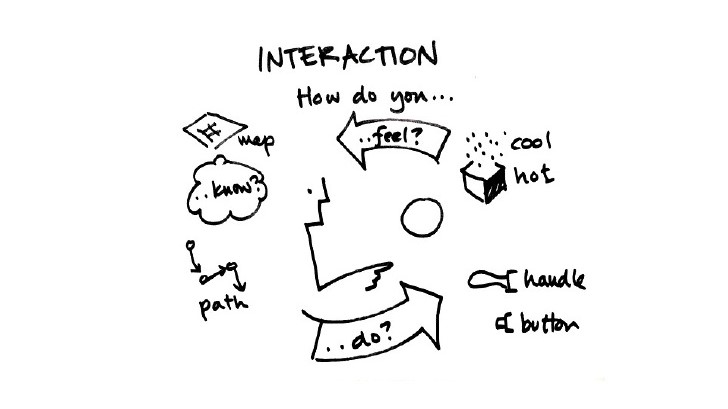
Interaction design is a process of creating engaging and meaningful designs that help improve the interaction between users and products – shaping and influencing our everyday lives. Bill Verplank is a designer and researcher who focuses on interactions between humans and computers, he states that designers in the field are faced with 3 key questions. How do you do? How do you feel? How do you know? (Verplank, 2015). Referring to how designers will affect the world, how will they get feedback, and how will the user understand how to use the product. An interactive designer must wear the hat of many roles relative within different design realms, including information design, information architecture, graphic design and interface design, to achieve the best results.

Bill Verplank Interaction Design [Image] (2009). Retrieved March 9, 2019 from https://www.slideshare.net/jazzliang/interaction-design-material-form-and-metaphor-1311497

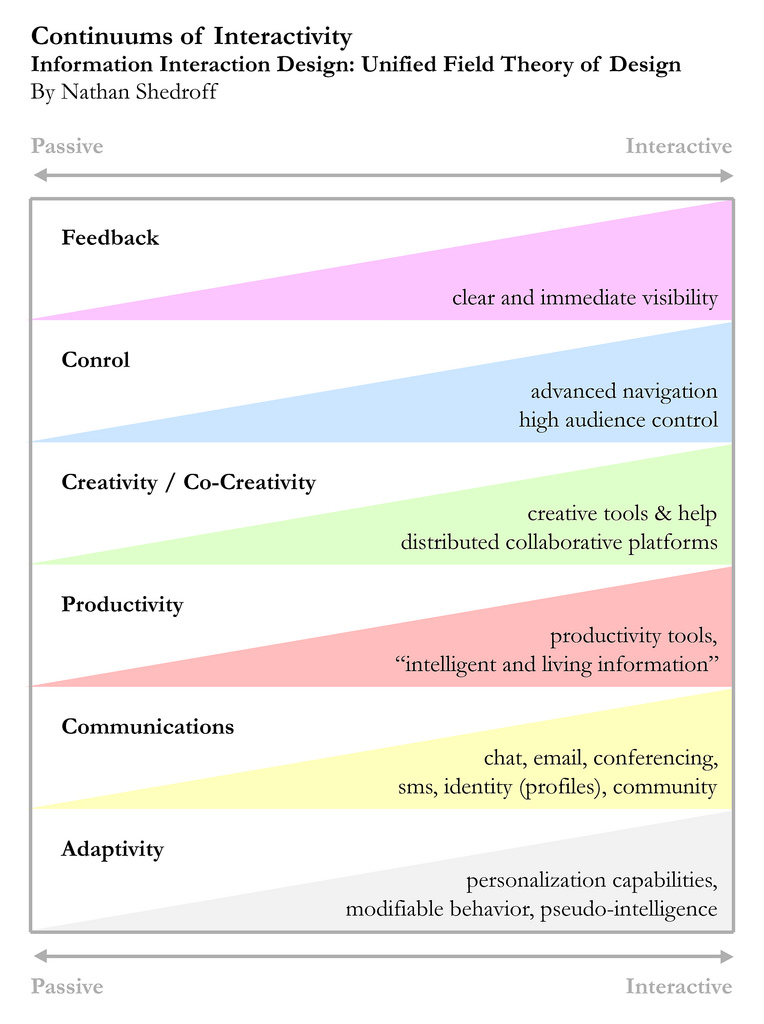
There are several disciplines that contribute to interaction design, each framing a task differently, therefore provides different approaches. Cognition is an important aspect, as it is the mental process or act of acquiring knowledge and understanding through thoughts, experiences, and senses. These are vital information designers need especially for screen designs. The continuum of interactivity is a set of factors (feedback, control, creativity/co-creativity, productivity, communication, adaptivity) that are inhabited within certain interactions with humans and different products.

Continuum of Interactivity [Image] (2009, May) Retrieved March 9, 2019 from https://www.flickr.com/photos/julioterra/3512210034

These factors vary due to the amount of control a user has over the tools, pace or content, to be able to be productive or creative. There are 5 key design areas that contribute to the designing of interactive products, interactivity, information architecture, time and motion, narrative and interface. In sum, interactive design isn’t centrally based on the information, but the experience it provides people.