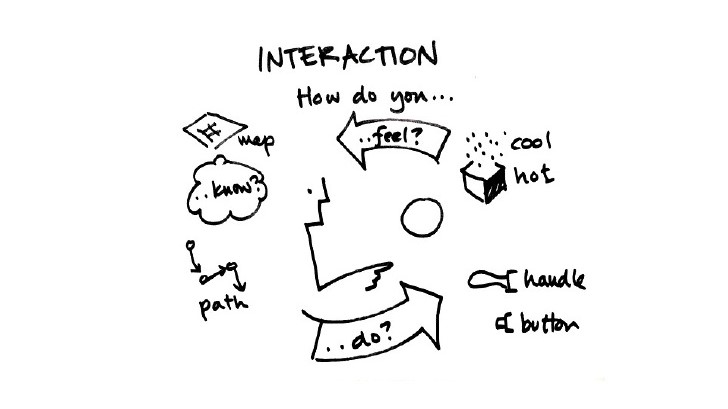
Interaction design is a process of creating engaging and meaningful designs that help improve the interaction between users and products – shaping and influencing our everyday lives. Bill Verplank is a designer and researcher who focuses on interactions between humans and computers, he states that designers in the field are faced with 3 key questions. How do you do? How do you feel? How do you know? (Verplank, 2015). Referring to how designers will affect the world, how will they get feedback, and how will the user understand how to use the product. An interactive designer must wear the hat of many roles relative within different design realms, including information design, information architecture, graphic design and interface design, to achieve the best results.
There are several disciplines that contribute to interaction design, each framing a task differently, therefore provides different approaches. Cognition is an important aspect, as it is the mental process or act of acquiring knowledge and understanding through thoughts, experiences, and senses. These are vital information designers need especially for screen designs. The continuum of interactivity is a set of factors (feedback, control, creativity/co-creativity, productivity, communication, adaptivity) that are inhabited within certain interactions with humans and different products.
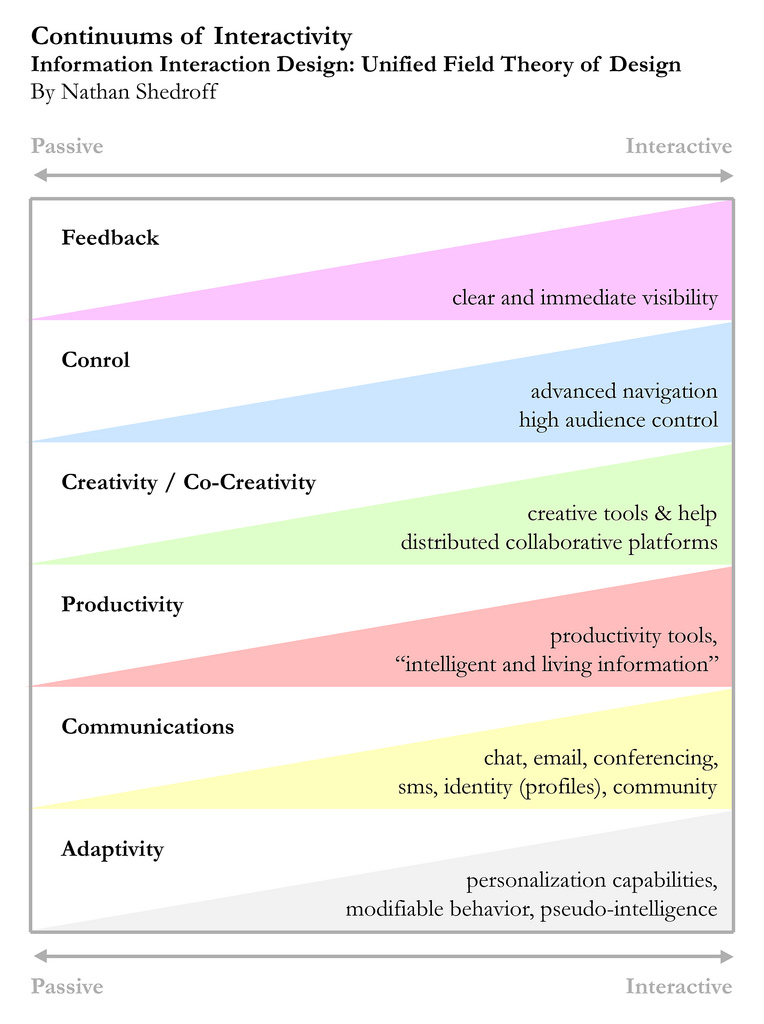
These factors vary due to the amount of control a user has over the tools, pace or content, to be able to be productive or creative. There are 5 key design areas that contribute to the designing of interactive products, interactivity, information architecture, time and motion, narrative and interface. In sum, interactive design isn’t centrally based on the information, but the experience it provides people.
 Amie's Blog